
Summary
- Effingham County commissioners approved the preliminary site plan for OpenAI’s Project Camellia data center amid continuing lawsuits and resident opposition.
- Project engineer Aakash Verma said planned water and power usage would not rise, while commissioners questioned building height.
- Commissioners plan another vote on conditional-use rules in December and a data center moratorium vote in January.
Amid the ongoing lawsuits that have plagued Effingham County commissioners regarding an OpenAI data center, the meeting that included a vote on approving the site plan drew in many county residents.
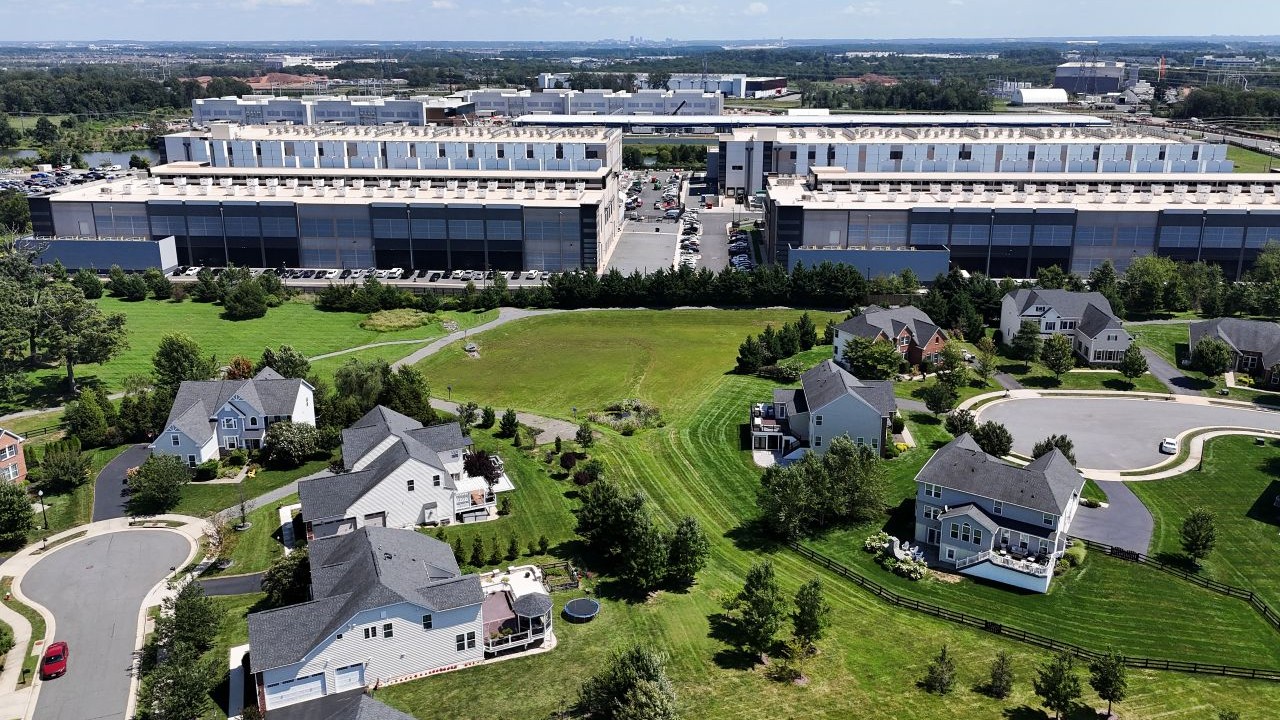
During the meeting on Tuesday, commissioners gathered and discussed various topics, including the OpenAI data center in the county, also referenced as Project Camellia.
Regarding approval of the data center proposal, Phil Kieffer, an Effingham County commissioner, told the Daily Signal, “It’s important for folks to understand that the Board of Commissioners did not grant ‘approval’ for the project. The use was an approved use in I-1 zoning districts.”
He explained that zoning of the property to I-1 occurred over 10 years ago, and that the action related to approval of the preliminary site plan.
“That process is a technical process [that] simply ensures that their plan complies with all requirements under the I-1 zoning districts. Because the applicant exceeded all requirements, it was appropriately approved,” Kieffer said.
TRENDING ARTICLES



Public Comment Gets Heated
Following the vote to ratify the site plan, one person in attendance said, “This is the biggest data center in the world.”
Later, someone shouted, “Shame, shame on all of you. This is our community. You cannot compare this data center to any other data center because it’s the biggest in the world. … They don’t know how loud it’s going to be.”
Toward the end of the meeting, one resident of the county, Brooke Jarrett, voiced her concern about the project, saying, “I would really appreciate looking at these sorts of items for moratoriums and legislation and rules and guidelines for all of these projects moving forward for the people like me.”
What Are the Concerns?
The controversy, specifically regarding the lawsuits, has come down to two main concerns.
“The main, overarching concern I have heard and outlined in the complaints is that they are upset that their elected leaders negotiated this massive deal without their knowledge,” Greg Gilluly, an attorney for Savage, Turner, Pinckney, Savage, Sprouse & Gilluly, told the Daily Signal.
“There is also a concern with the impact of the AI data center on community. … It is undetermined what impact it will have on property values, the environment, health, and the future. There are too many unknowns,” he added.
Gilluly continued to explain that three lawsuits have been filed.
Despite those lawsuits, Effingham County Manager Tim Callanan told the Daily Signal that the county has taken additional steps to help mitigate the impact on residents.
“Where new concerns or potential mitigation opportunities were identified, the county took additional steps to communicate those issues to the project team and pursue further measures to minimize potential impacts on surrounding residents,” he said.
Project Camellia
Aakash Verma, the OpenAI project engineer for the data center project, said at the meeting that water and power usage would not rise from the prior estimate.
While noise pollution tends to be a common concern among residents, Kieffer told the Daily Signal that those have been addressed. In the meeting, Verma explained how a 20-foot-tall earthen berm is planned to operate and help with noise pollution onsite.
“Noise concerns have been mitigated by the property owner by excluding the use of gas or fuel powered generators for the computing systems. This backup power will be supplied by battery storage,” Kieffer said.
Commissioners asked questions about the height of the facility, which, while originally planned for 35 feet, jumped to 42 feet, a 7-foot difference that can be attributed to a parapet on the main layout of the facility, Verma explained.
‘Conditional Use’ and Next Steps
Additionally, the commissioners held a reading for the first time of a zoning ordinance that would cause data centers to be a “conditional use,” an action that would ensure a public hearing before approval. Another reading and vote on the measure that would cause data centers to be “conditional” is expected to happen at the next commission meeting in December.
However, as Kieffer told the Daily Signal, “The proposed project will not have to go through any additional public hearings. The recent change, which made ‘data centers’ a conditional use in industrial zonings, will only apply to proposed data centers in the future.”
“The recent change does not, and cannot legally, become affective retroactively,” he said.
Additionally, the commission is planning to vote on a moratorium for data centers in January after commissioners decided to postpone the decision to give cities in Effingham the opportunity to work together with the county.
Beth Helmly, an Effingham commissioner, was the only one to vote against tabling the measure.
While it is somewhat uncertain what will happen in the future, Gilluly said, “The litigation could possibly affect future approvals, but that will be up to the court to decide.”


Read the first chapter of The Woketopus right now for FREE
Today, even with President Trump’s victory, leftist elites have their tentacles in every aspect of our government.
The Daily Signal’s own Tyler O’Neil exposes this leftist cabal in his new book, The Woketopus: The Dark Money Cabal Manipulating the Federal Government.
In this book, O’Neil reveals how the Left’s NGO apparatus pursues its woke agenda, maneuvering like an octopus by circumventing Congress and entrenching its interests in the federal government.
You can read the first chapter of this new book for FREE in this eBook, The Woketopus: Chapter One using the secure link below.

The Daily Signal depends on the support of readers like you.
RELATED ARTICLES





Don’t miss the

Don’t miss the signal
