

Summary
- Democrat governors in Texas, Iowa, and Georgia are preparing education-policy changes after the 2026 midterm elections, putting some school choice programs under pressure.
- EdChoice reports 21 education savings account programs in 18 states and 23 voucher programs in 15 states, while significant public-awareness gaps remain.
- School choice advocates argue that families need clearer information about existing programs and the election stakes that could determine whether those programs continue.
As we recover from the whirlwind that was the midterm election, one question is resonating through the education space—what happens to school choice?
In several states, school choice is on the chopping block.
Texas, Iowa, and Georgia are all bracing for a renewed choice battle after electing Democrat governors. Arizona Republicans lost both legislative chambers. Wisconsin gained a Democrat trifecta, potentially threatening its tax credit and voucher programs. Nationally, 12 of the 88 state legislative chambers on the midterm ballot flipped to Democrat control while Republicans flipped zero.
Despite appearances, the popularity of school choice is high and rising across the United States. Recent polling from EdChoice shows that parents are just as likely to prefer nontraditional options (like public charter schools or private schools) as they are to prefer a traditional public school education. Across the country, there are now 75 school choice programs in 34 states (plus Washington, D.C., and Puerto Rico) that serve more than 1.5 million students.
This begs the question: If school choice is so popular, how do candidates who oppose school choice keep getting elected?
TRENDING ARTICLES


Sometimes it comes down to messaging. Some school choice opponents, like Gov.-Elect Hinojosa in Texas, are upfront with their opposition—her priorities include “end[ing] the voucher scam”—while others simply express support for public schools without mentioning choice, like some of the Democrats who flipped state house seats in South Carolina.
The root cause is a heretofore unappreciated public awareness failure among school choice advocates. The same EdChoice polling shows that a significant percentage of people are either unsure whether their state has a particular school choice program or have never heard of that type of program.
For example, 32% of people have never heard of ESAs, or education savings accounts, 26% have never heard of school vouchers, and 16% have never heard of public charter schools. Fifty percent of parents were unsure whether their state had an ESA program (there are 21 programs in 18 states), 45% were unsure whether school vouchers were available to them (23 programs in 15 states), and 28% were unsure about whether they had public charter schools in their state (Nebraska, South Dakota, and Vermont are the only states without charter schools).
If families are unsure about the school choice options available to them in their states, how can they vote to defend them?
Of course, it is up to each individual voter to decide what their priorities are in each election and vote for whoever aligns best with their values. However, the buck does not stop there.
These numbers are unimaginable to those of us in the school choice movement. How can only half of our parents know about education savings accounts—by far the most promising school choice program we have? How can 16% of the public not know about public charter schools?
Competing priorities will always compete. Every election is a series of position statements from both sides that try to tell you that what they care about is what you should care about. We must ensure that our audiences understand just how fragile the school choice movement can be.
Choice is not a right. It is a privilege granted by the state legislature that can literally disappear at the stroke of a pen.
Just because a school program exists now does not mean that it will always exist.
If school choice is not a top priority in an election cycle, so be it. Choice may make gains or suffer losses depending on the results, and such is the nature of politics. However, we must be sure that our voters understand what exactly is at stake for school choice as they take to the polls.
Are you willing to vote for a candidate who threatens your child’s ESA award but promises to fight for cheaper car insurance? Or would you rather pick the candidate who supports school choice but is supported by “big oil?”
What is an intensely personal decision carries enormous consequences for the future of our children, and we have to do better next time. They deserve it.
We publish a variety of perspectives. Nothing written here is to be construed as representing the views of the Daily Signal.
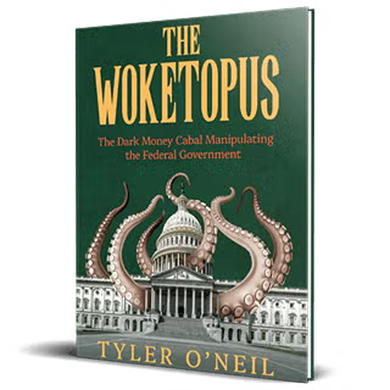
Read the first chapter of The Woketopus right now for FREE
Today, even with President Trump’s victory, leftist elites have their tentacles in every aspect of our government.
The Daily Signal’s own Tyler O’Neil exposes this leftist cabal in his new book, The Woketopus: The Dark Money Cabal Manipulating the Federal Government.
In this book, O’Neil reveals how the Left’s NGO apparatus pursues its woke agenda, maneuvering like an octopus by circumventing Congress and entrenching its interests in the federal government.
You can read the first chapter of this new book for FREE in this eBook, The Woketopus: Chapter One using the secure link below.

The Daily Signal depends on the support of readers like you.
RELATED ARTICLES





Don’t miss the
Don’t miss the signal
