North Korea’s Leadership, Not the Weather, Is to Blame for Worsening Humanitarian Crisis
Earlier this year, Pyongyang declared it was suffering the “worst drought in 100 years.” Indeed, North Korea has suffered widespread food shortage since the early 1990s when an estimated 5 percent of its population died of starvation and related diseases. The situation remains dire. According to the World Development Indicators, 15.2 percent of North Korean children under age five were underweight in 2012. The U.N. Office for the Coordination of Humanitarian Affairs reported in 2015 that the chronic malnutrition rate among children under five years of age was 28 percent.
This long-term food shortage aggravates health conditions. Insufficient nutrition weakens the body’s immune system, making North Koreans more susceptible to infections, such as tuberculosis (TB). According to the North Korean Humanitarian Needs and Priorities 2015 Report, TB is a major public health problem. 2,500 North Koreans die annually from this fatal, infectious disease. The prevalence and incidence of TB in North Korea for 2011 are about three times larger than in South Korea.
Even worse, it is estimated that the spread of multidrug-resistant tuberculosis (MDR-TB), which is more difficult to treat than traditional TB, is much more advanced than previously assumed. North Korea does not have a health system for treating disease like MDR-TB. North Korea had a comprehensive free healthcare system from the late 1960s until it broke down during the economic crisis of the 1990s. The World Health Organization (WHO) concluded there is a 60 percent shortage in providing vital medicines to vulnerable populations. It is estimated that only 1 percent of the population in the DPRK receives proper free medical service.
North Korea has habitually blamed Mother Nature for its inability to feed its people. The reality is that North Korea’s disastrous economic system and its prioritizing military spending over the needs of its people are to blame. According to United Nations Commission of Inquiry into Human Rights in North Korea, the regime spent large amounts of its resources on military, luxury goods, and the advancement of the Kim regime’s cult of personality instead of feeding the hungry.
The COI report documented that even at the height of mass starvation, the regime hindered international food aid by imposing conditions that were not based on humanitarian principles. The U.N. report concluded that North Korean leadership was responsible for using food as a means to maintain the regime.
In 2012, North Korea spent $645 million on luxury goods while in 2013 the United Nations World Food Program (WFP) asked donor nations for $150 million to aid North Korea. Moreover, the U.N. estimated that even during the worst famine period, the amount of resources needed to solve the food crisis was approximately $100–200 million.
TRENDING ARTICLES

Thoroughly and effectively addressing North Korea’s humanitarian crisis is not possible without a complete reform and replacement of North Korea’s leadership. The Heritage Foundation will address these and other issues behind North Korea’s humanitarian crisis in a forthcoming report
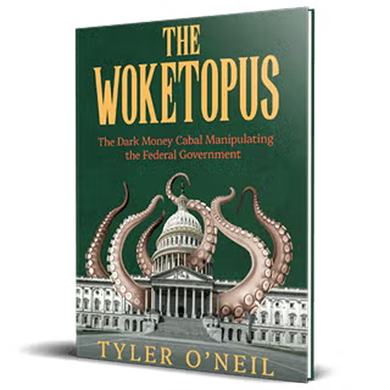
Read the first chapter of The Woketopus right now for FREE
Today, even with President Trump’s victory, leftist elites have their tentacles in every aspect of our government.
The Daily Signal’s own Tyler O’Neil exposes this leftist cabal in his new book, The Woketopus: The Dark Money Cabal Manipulating the Federal Government.
In this book, O’Neil reveals how the Left’s NGO apparatus pursues its woke agenda, maneuvering like an octopus by circumventing Congress and entrenching its interests in the federal government.
You can read the first chapter of this new book for FREE in this eBook, The Woketopus: Chapter One using the secure link below.
TRENDING ARTICLES


The Daily Signal depends on the support of readers like you.
RELATED ARTICLES

Don’t miss the

Don’t miss the signal