
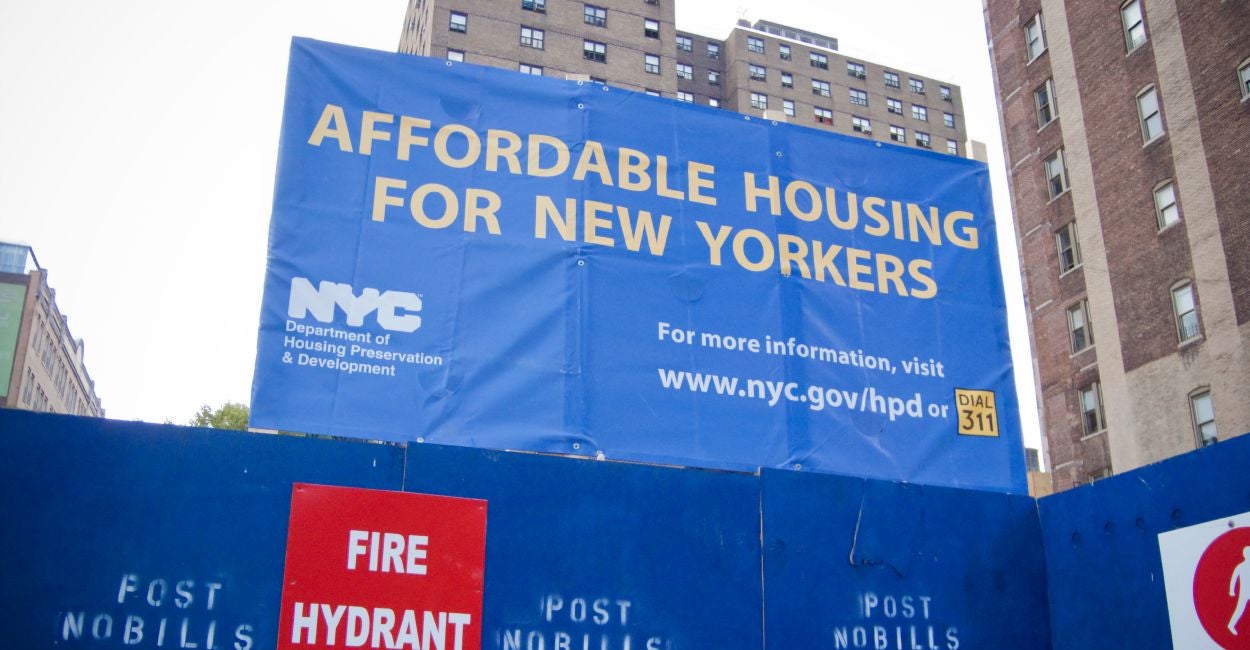
Why is housing so expensive in some cities, and relatively cheap in others?
Place the blame on land-use restrictions put in place by local governments.
During the housing boom of 2000 to 2005, the cry often went up from Washington that housing wasn’t affordable anymore. From 2000-2005 the median sales price of American single-family homes rose from $143,600 to $219,600.
This rise was not the same everywhere though. In fact, it was concentrated in areas where land-use restrictions were especially prevalent.
As pointed out in the book, “The Housing Boom and Bust” by Thomas Sowell,
“It has been precisely where there was massive government intervention, in the form of severe building restrictions, that housing prices skyrocketed. Where the market was more or less left alone, . . . housing prices took a smaller share of family income than in the past.”



A recent National Bureau of Economic Research report, by Chang-Tai Hsieh, and Enrico Moretti concurs that land-use restrictions are to blame when housing becomes unaffordable.
Much of the shortage in housing in high-cost-of-housing cities such as New York, San Jose, and San Francisco is due to local ordinances and laws that place restrictions on land use. Land-use restrictions benefit the first comers who already own housing units; their buildings earn higher rents and can be sold for more in housing-starved markets.
Typical land-use restrictions include open space laws, zoning laws, height restrictions, minimum lot size laws, historical preservation laws, building permit laws, and farmland preservation laws. In many locations planning commissioners can require each building to be built to whatever specifications they choose on a case by case basis, making the building more expensive to build, and driving up the costs that must be covered by the future buyers or renters of it.
In some neighborhoods, residents can make objections to building plans that must be entertained no matter how frivolous the objections are—this takes up time and drives up costs for builders that likewise get passed on to the future inhabitants of the building. These ordinances and laws are all examples of government intervention.
Government created the problem of unaffordable housing, catering to special interests and existing home-owners. Those special interests need to be met head-on by business owners and others concerned about the high prices and artificial housing shortages caused by land-use restrictions.

Read the first chapter of The Woketopus right now for FREE
Today, even with President Trump’s victory, leftist elites have their tentacles in every aspect of our government.
The Daily Signal’s own Tyler O’Neil exposes this leftist cabal in his new book, The Woketopus: The Dark Money Cabal Manipulating the Federal Government.
In this book, O’Neil reveals how the Left’s NGO apparatus pursues its woke agenda, maneuvering like an octopus by circumventing Congress and entrenching its interests in the federal government.
You can read the first chapter of this new book for FREE in this eBook, The Woketopus: Chapter One using the secure link below.
TRENDING ARTICLES


The Daily Signal depends on the support of readers like you.
RELATED ARTICLES





Don’t miss the

Don’t miss the signal